
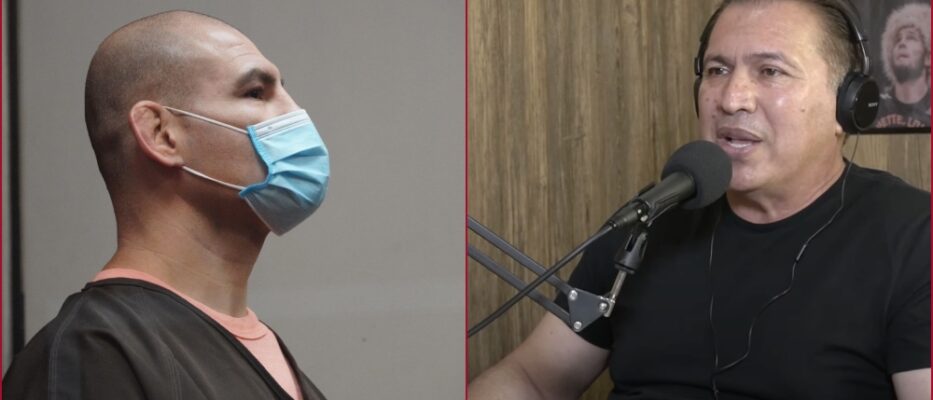
Mendez on Velasquez Verdict: “Science Proved He Couldn’t Stop Himself”
Cain Velasquez has been sentenced to prison, but according to longtime coach Javier Mendez, new scientific evidence proves the former UFC champion wasn’t in control of his actions. In an emotional interview, Mendez sheds light on the verdict, a heart-wrenching father-son conversation—and why he believes Velasquez deserves forgiveness, not punishment.
“I was hoping for house arrest—not prison”
When Javier Mendez woke up on March 24 to the news that Cain Velasquez had been sentenced to five years in prison—despite already serving over three years in custody—he was stunned. He had been hopeful that Velasquez would be allowed to finish his sentence under house arrest.
“I couldn’t believe it. I was hoping he’d get time served or at most an ankle monitor so he could be home with his kids.”
Still, Mendez showed deep appreciation for Judge Arthur Bocanegra, who reportedly struggled emotionally as he delivered the verdict.
“He was almost in tears. That was his last day before retirement. I really believe he did the best he could for Cain.”
Brain scan reveals shocking lack of impulse control
A central element in Mendez’s emotional defense of Velasquez is a court-admissible EEG brain scan that was conducted while Velasquez was in custody. According to Mendez, the scan showed that Velasquez had zero impulsivity and an extreme inability to control his emotions under stress.
“He couldn’t stop himself. He just reacted. Science proved it—it’s a fact.”
Mendez recalled how Cain once lost control during training, throwing a much smaller sparring partner to the ground and stomping him—despite specific instructions not to.
“At the time I was furious. But now I understand. That was an impulse, not a decision.”
The scan showed Velasquez lacked emotional self-regulation, which, according to Mendez, could have formed the basis of a medical defense in trial—had the case not been resolved through a plea deal.
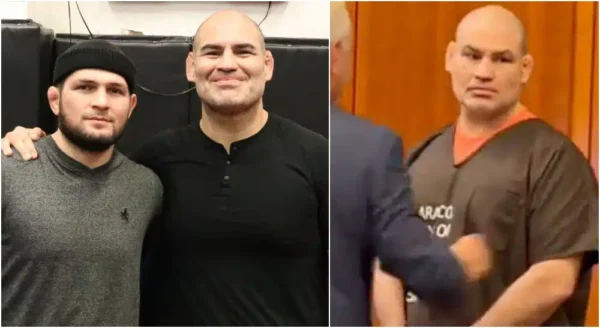
“If it was my child—I’d have done worse”
While Mendez acknowledges that Velasquez’s actions endangered lives and were legally wrong, he doesn’t hide his empathy. In fact, he said he might have gone further if he were in Cain’s shoes.
“I would’ve done worse. I would’ve made that man look me in the eye. I would’ve planned it so no one could trace it to me. But I would’ve done it.”
Mendez’s statements reflect a raw, visceral parental instinct—something he believes many parents would relate to when it comes to protecting their children from harm.
TRENDING:
- Full Results – UFC on ESPN: Moreno vs. Erceg
- Bo Nickal on Potential Fight Against Khamzat Chimaev: “Most Exciting Matchup”
- Jorge Masvidal calls out Leon Edwards for UFC return
“What about the boy?” – focus on the real victim
Throughout the interview, Mendez repeatedly brings the focus back to Velasquez’s son, who he says is already suffering from trauma—first from the alleged abuse, then from the absence of his father.
“What happens to the boy now? He already lost his father for eight months. Now he’s going to lose him again—during the most traumatic part of his young life.”
Mendez became emotional as he recalled a conversation where Velasquez told his son why he had been gone:
“Cain told me: ‘I told him.’ I asked, ‘What did he say?’ Cain said: ‘He said, ‘Don’t do it again.’’ Think about that—‘Don’t do it again. Don’t be gone again.’”
That moment brought Mendez to tears.
A shorter sentence likely due to good behavior
Despite the five-year sentence, Velasquez has already served 1,283 days and may only have to serve 4–8 more months, depending on his behavior and how the prison system calculates his time.
“Cain’s going to be an asset in there. He’ll teach people what it means to be a man and a father. That’s who he is.”
Mendez is optimistic that Velasquez’s good conduct and character will continue to shine during his remaining time behind bars.
Harsh words for the prosecution
Mendez didn’t hold back when it came to his opinion of the prosecutor.
“That prosecutor’s an idiot. If you’re a father and you tried to lock Cain away for life—shame on you. You’re heartless.”
He believes the justice system failed to offer Velasquez the rehabilitation and psychological help he needed, choosing instead to make an example of him.
“Cain is not a monster—he’s a father”
Mendez closed the interview with a powerful plea for understanding.
“He’s not a danger. He’s not a threat. He’s a beautiful human being. He’s a father who lost control because someone hurt his child. And the science backs that up.”
He emphasized that while Velasquez must face the consequences of his actions, society should also consider why those actions happened—and how trauma, biology, and family love all played a role.
Summary: A sentence, a diagnosis—and a father’s rage
Cain Velasquez’s sentencing is not just about criminal justice. It’s a story about neuroscience, trauma, and love. Through Javier Mendez’s voice, we’re given access to the heart of a father who lost control—and the coach who still believes in him.


